Skip to content

The Presence of the Past

Here is a classic interview with a young Rupert Sheldrake in 1989. From the description: Were there any “laws of the universe” at the time of the “big bang?” Oxford trained biologist Rupert Sheldrake, Ph.D., author of The Presence of the Past, says that all laws developed as “habits” over time. Thus the universe and its laws can be seen to be continually evolving. In this view the theory of evolution can be applied to physics, chemistry and cosmology.
Read more

Sheldrake on “Through the Wormhole”

From the Science Channel website: The belief in ESP or the sixth sense dates back thousands of years. The Greek historian Herodotus wrote that Croesus, who ruled a kingdom in what is now Turkey in the sixth century B.C., consulted oracles — that is, groups of priests claimed to be able to predict the future — before he went to war. In ancient India, Hindu holy men were believed to possess the power to see and hear at a distance, and to communicate through telepathy. In the late 1700s, the Viennese physician Franz Mesmer claimed that he could give people ESP powers by hypnotizing them.
Read more

The Science Delusion: Freeing the Spirit of Enquiry

Rupert Sheldrake’s new book, The Science Delusion, will be on the bookshelves in the UK on January 5 and in May in the US. The science delusion is the belief that science already understands the nature of reality. The fundamental questions are answered, leaving only the details to be filled in. In this book, Dr Rupert Sheldrake, one of the world’s most innovative scientists, shows that science is being constricted by assumptions that have hardened into dogmas. The sciences would be better off without them: freer, more interesting, and more fun.

According to the dogmas of science, all reality is material or physical. The world is a machine, made up of dead matter. Nature is purposeless. Consciousness is nothing but the physical activity of the brain. Free will is an illusion. God exists only as an idea in human minds, imprisoned within our skulls. But should science be a belief-system, or a method of enquiry? Sheldrake shows that the materialist ideology is moribund; under its sway, increasingly expensive research is reaping diminishing returns.

In the skeptical spirit of true science, Sheldrake turns the ten fundamental dogmas of materialism into exciting questions, and shows how all of them open up startling new possibilities. The Science Delusion will radically change your view of what is possible. and give you new hope for the world.

My Books From 2011

I think this is all of them from the past year.

  • Evolution by James A. Shapiro
  • Jaya by Dr. Devdutt Pattanaik
  • The Viral Storm by Nathan Wolfe
  • The Ultimate Question 2.0 by Fred Reichheld, Rob Markey
  • Stop Walking on Eggshells by Randi Kreger, Paul T. Mason
  • The First 90 Days by Michael Watkins
  • Read more

Eyes Closed

“Time passes in moments… moments which, rushing past define the path of a life just as surely as they lead towards its end. How rarely do we stop to examine that path, to see the reasons why all things happen, to consider whether the path we take in life is our own making or simply one into which we drift with eyes closed. But what if we could stop, pause to take stock of each precious moment before it passes? Might we then see the endless forks in the road that have shaped a life? And, seeing those choices, choose another path? Or, what if there was only one choice and all the other ones were wrong? And there were signs along the way to pay attention to.” – Scully

Indra’s Lesson

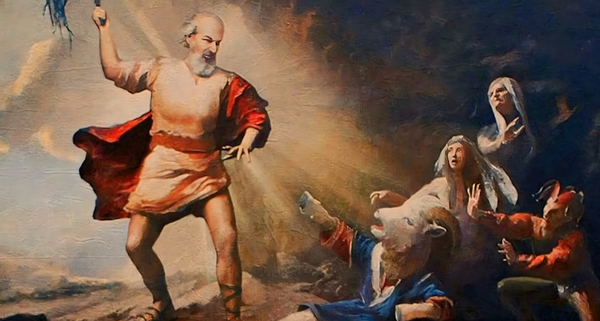
There is a wonderful story in one of the Upanishads about the god Indra. Now, it happened at this time that a great monster had enclosed all the waters of the earth, so there was a terrible drought, and the world was in a very bad condition. It took Indra quite a while to realize that he had a box of thunderbolts and that all he had to do was drop a thunderbolt on the monster and blow him up. When he did that, the waters flowed, and the world was refreshed, and Indra said, “What a great boy am I.”
Read more

The Valley of the Shadow of Death

We were at my Nana’s house watching TV when I had this strange feeling that the air was being sucked out of the room. I yelled for everyone to get down on the floor and I covered them with blankets. Then, all of the windows in the house exploded inward and there was this overpowering sound like a train coming toward us. I ran outside and stood in the driveway looking at what must have been an F4 tornado about half a mile in the distance. It was uprooting and destroying everything in it’s path and heading directly for me.

I was just staring at the blackness of the tornado as it ripped up houses and trees in its path. But I couldn’t move. My family was yelling at me to get out of the way and run but I was paralyzed with the insatiable curiosity of staring death in the face. It was just a few yards off and I marveled at the beauty of it and the perfection of nature.
Read more

The Ancient City of Dvārakā

In the Mahabharata, the city of Dvārakā was created by Vishwa Karma (the architect of the gods) with instructions from Lord Krishna. In the Mahabharata, Dvārakā (also known as Dvāravatī, both names meaning “the many-gated city” in Sanskrit) is the capital of the Yādava who ruled the Anarta Kingdom. Volume 16 of the Mahabharata describes this important city, situated on the western point of Gujarat, submerged in the sea.
Read more