Skip to content

You Have Colorectal Cancer

This has been a rough week. After CT scans, PET scans, colonoscopies, and biopsies a close family member was diagnosed with stage 3 colorectal cancer. Three days later surgeons removed an entire large intestine and have already scheduled chemotherapy and radiation treatments.

I can’t imagine hearing a doctor say, “You have cancer”. It must be like being struck by lightning – it comes out of nowhere. Your entire life changes instantly. 100 years ago this would be a death sentence but thanks to advances in science and medicine people can continue living for decades after treatment. Even with these advances, the state of the art in cancer treatment is barbaric. Some day doctors will heal the damaged tissue with some Star Trek looking device and wonder how me made it through these dark ages.

In almost all cases, life is preferable to death. As I sit here in her hospital room watching her recover, I’m so happy that she is still here – I hope I can appreciate every moment with her. She has been made to pay a high price for her life and though her faith in God is strong I know that the road ahead is going to be very painful.

If you’re over 50 years old and have not had a colonoscopy, don’t be stupid, get one now. It’s a fairly simple procedure and it may save your life.

Photos From India

[slideshow]

It’s hard to capture the reality of India – the beauty, the animals, the poverty, and the smiling kids if you are a really crappy photographer like me. So, I’ve put together a slide show from my trip to Delhi plus pictures from other parts of India that I want to visit next time. At the beginning of Mahabharata, Vyasa says, “once you have finished reading this poem, at the end you will be someone else.” India is the same way – India does not change for you. India changes you.

The Anti-Sheldrake Phenomenon

By devising a testable hypothesis of natural memory, Rupert Sheldrake has established himself as the world’s central figure in the evolutionary theory of existence. Heir to the lineage of Darwin, Peirce, Bergson, Elsasser and Bohm, Sheldrake bears on his shoulders the weight of their worldview. Attacks on his work amount to an offensive against any alternative to a universe under the control of eternal immutable laws.

In 1980 Bohm proposed that material events are abstracted into an “implicate” order that influences subsequent events in the everyday “explicate” realm. The following year, Sheldrake proposed that current organic events are influenced by a composite of previous, similar events. Are these different theories or just the same theory arrived at by different means? When the scientists got together to discuss their work, they weren’t sure.

Yet their books received radically different receptions. Bohm’s Wholeness and the Implicate Order was treated with the respect owing to any scientific work, while Sheldrake’s A New Science of Life evoked not just hostility but hysteria and out-of-thin-air accusations of pseudoscience.

via Articles and Papers – Articles by Other Authors – The Anti-Sheldrake Phenomenon.

Schools Kill Creativity

Sir Ken Robinson makes an entertaining and profoundly moving case for creating an education system that nurtures (rather than undermines) creativity.
Read more

The Unfortunate Sex Life of the Banana

The banana is a freakish and fragile genetic mutant; one that has survived through the centuries due to the sustained application of selective breeding by diligent humans. Indeed, the “miraculous” banana is far from being a no-strings-attached gift from nature. Its cheerful appearance hides a fatal flaw— one that threatens its proud place in the grocery basket. The banana’s problem can be summed up in a single word: sex.

via Damn Interesting.

6 Insane Discoveries That Science Can’t Explain

We like to feel superior to the people who lived centuries ago, what with their shitty mud huts and curing colds by drilling a hole in their skulls. But we have to give them credit: They left behind some artifacts that have left the smartest of modern scientists scratching their heads.

For instance, you have the following enigmas that we believe were created for no other purpose than to f@#k with future generations.

via 6 Insane Discoveries That Science Can’t Explain | Cracked.com.

Why Us? How Science Rediscovered the Mystery of Ourselves

Science deserves to be challenged. After all, it is about questioning dogma and almost ceaseless scepticism. But there are those who want to go further, who believe that science deserves a good kicking too. James Le Fanu, a medical doctor and columnist for this newspaper, points out how many details of our lives, from thinking to breathing, are quite astonishing. They are extraordinary for not appearing to be extraordinary.

But there are no more miracles today, he sighs. Science has stripped the world of wonder with its relentlessly materialist, reductionist outlook. Everything is ultimately explicable and there’s nothing special any more. Despite the fact that quackery, strange-ologies and new-age mumbo jumbo seem as prevalent today as ever, Le Fanu declares that the triumph of science “is virtually complete”.

via Why Us? How Science Rediscovered the Mystery of Ourselves by James Le Fanu – review – Telegraph.

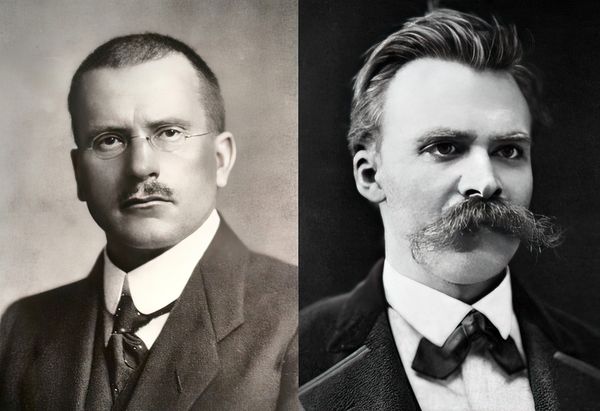
Carl Jung and the Holy Grail of the Unconscious

This is a story about a nearly 100-year-old book, bound in red leather, which has spent the last quarter century secreted away in a bank vault in Switzerland. The book is big and heavy and its spine is etched with gold letters that say “Liber Novus,” which is Latin for “New Book.” Its pages are made from thick cream-colored parchment and filled with paintings of otherworldly creatures and handwritten dialogues with gods and devils. If you didn’t know the book’s vintage, you might confuse it for a lost medieval tome.

And yet between the book’s heavy covers, a very modern story unfolds. It goes as follows: Man skids into midlife and loses his soul. Man goes looking for soul. After a lot of instructive hardship and adventure — taking place entirely in his head — he finds it again.

Carl Jung and the Holy Grail of the Unconscious – NYTimes.com.

Quantum Physics Findings Are Put to Work in Encryption and Philosophy

One of quantum physics’ crazier notions is that two particles seem to communicate with each other instantly, even when they’re billions of miles apart. Albert Einstein, arguing that nothing travels faster than light, dismissed this as impossible “spooky action at a distance.”

The great man may have been wrong. A series of recent mind-bending laboratory experiments has given scientists an unprecedented peek behind the quantum veil, confirming that this realm is as mysterious as imagined.

Quantum Physics Findings Are Put to Work in Encryption and Philosophy – WSJ.com.

India: A Land of Contradiction

I came to India to see how people here live – day to day. How important is commerce, religion, family? What I’ve found is that India is not that different from Europe or the United States. Their concerns are the same as ours. Religion here ranges from the superficial to the profound; commerce is the engine that drives the country; and family is very important. I wasn’t sure what to expect and perhaps expecting something different was a little silly in hindsight. I tend to focus on commonality rather than differences but here are some differences:

  • The people here are incredibly curious – curious about everything. I’m a minority here and get lots stares and smiles. When I am filming or taking pictures complete strangers walk up and want me to take their picture. It’s inexplicable to me.
  • There is no concept of waiting in line. There are so many people competing for attention that the solution is to just rush any service counter and push until you get to the front. It’s not considered rude – it’s just the way it is.
  • Traffic follows pretty much the same rules. If you can squeeze in between two lanes of traffic in the middle, go for it! Surprisingly, I’ve yet to see any serious accidents. There are dividing lines on the road but they are a complete waste of paint. There are also traffic lights but they are largely ignored unless a few police officers are directing traffic. The power grid goes down so often that you can easily understand why people ignore the traffic lights – most of the time they do not even work.
  • The poverty is everywhere. In fact, it is so ubiquitous that it’s easy to ignore. It appears the poorest people do not do most of the begging because they are busy doing whatever jobs they can find. The state hires street sweepers – not the big machines like in the US – to sweep the streets with straw brooms. They are everywhere sweeping away. In a dusty city like Delhi, it’s an endless job. I’ll have to write more about poverty later as I haven’t had a chance to really mentally process this side of India.
  • Construction is everywhere. You can see the tangible results of the massive influx of money into India. There is no doubt that India’s potential is yet to be tapped.
  • I’ve also discovered that there is no reason to learn Hindi if you want to do business in India. Everyone with a college education speaks English and there are enough signs in English that an American can easily find their way around. However, without knowing Hindi you really miss out on the heart of the culture. Most of the working class do not speak English and that’s the majority of the population – at least in Delhi. If you want to understand India, you’ll have to learn the language.

That’s all I’ve got for now. I will write more later…