

How well do we understand the statistics of reality?
Some statements don't make for good public service announcements, but they have the advantage of being accurate. Strip away the circular reasoning and you're left with simpler, less dramatic truths.
I've watched a lot of true crime television. Probably too much. And there's a phrase that gets repeated so often it's become background noise: "The more time that goes by, the less likely it will be to find the person." Law enforcement says it. News anchors say it. The families say it back because they've heard it so many times.
It sounds obviously true. Of course time matters. Every second counts. Act now. But here's the thing. I'm not sure it actually means what everyone thinks it means. After watching way too many episodes of 48 Hours, it's clear that initial conditions predict the outcome of a case, despite those conditions not being fully known at the time.
The hidden variable
Most missing persons cases resolve quickly. A teenager who didn't tell anyone they were going to a friend's house. An adult who left voluntarily and resurfaces a few days later. Someone who got lost and found their way back. These cases were never dangerous to begin with. They resolve fast and safely, not because speed caused the safety, but because the same underlying situation produced both outcomes.
Meanwhile, the small percentage of cases involving actual danger (stranger abductions, foul play) may have poor outcomes regardless of how fast anyone responds. The danger was present from the moment the person went missing.
So when someone says "the longer they're missing, the worse the odds," they're conflating two completely different things: low-risk cases that resolve fast and safely, and high-risk cases where the danger existed from the start. The quick resolution didn't cause the good outcome. The case type predicted both the duration and the result.
This is what statisticians call confounding. A hidden variable (the nature of the disappearance itself) drives both how long someone is missing and whether they're found alive. But the way we talk about it makes it sound like finding them quickly is what keeps them alive.
The exception that proves the pattern
Now, there is one narrow category where speed might actually matter: stranger abductions of children. A Department of Justice study found that in cases where abducted children were murdered, about 74% were killed within the first three hours. There's a clear causal mechanism here. If a child has been taken by someone intending harm, intervening before the perpetrator acts can prevent that harm.
But demonstrating that the recovery prevented an imminent harm that would have occurred requires either the perpetrator confessing to intended future actions, or circumstantial evidence like prior victims. That's a high evidentiary bar.
The causal claim rests partly on inference: dangerous person plus vulnerable victim plus intervention equals harm prevented. Reasonable, but not the same as direct proof.
And stranger abductions are rare, roughly 350 per year in the US out of hundreds of thousands of missing child reports. The dramatic cases that make the news aren't representative of what "missing person" typically means.
Meanwhile, at the tanning salon
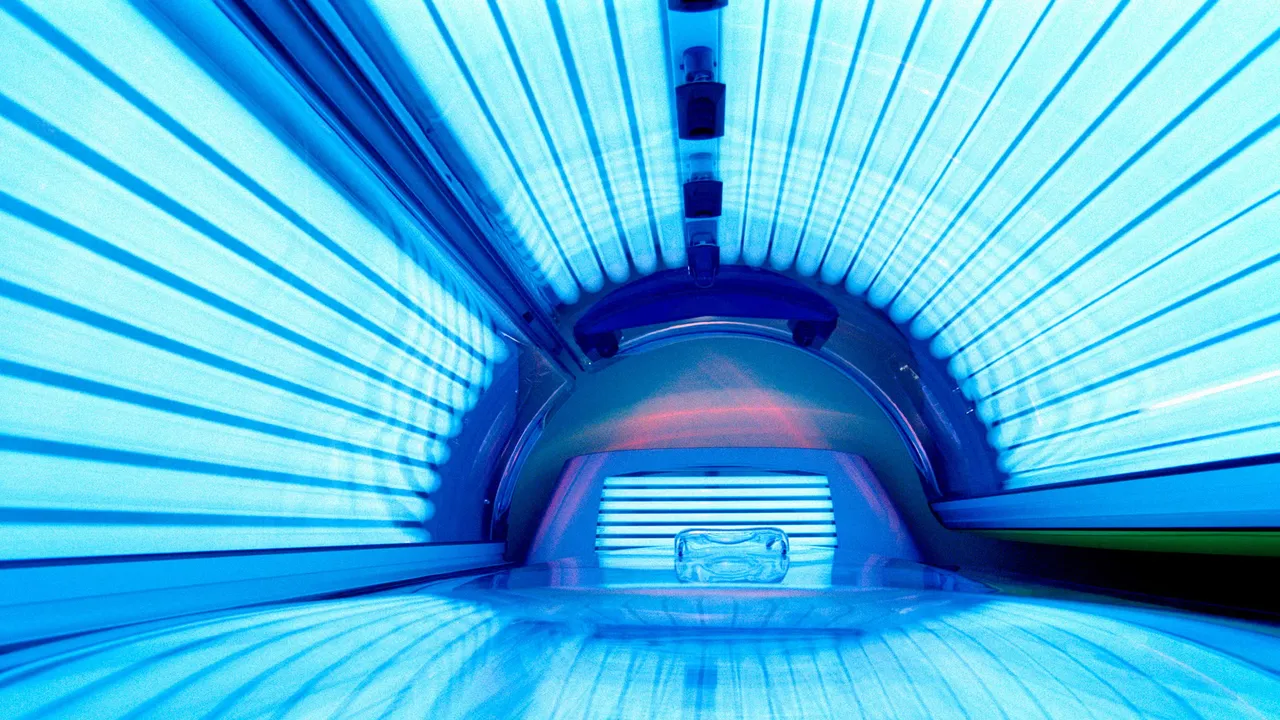
I started thinking about this pattern and realized it shows up everywhere. Take the claim that tanning salons cause cancer. The International Agency for Research on Cancer classified tanning beds as Group 1 carcinogens in 2009. Multiple studies show associations between indoor tanning and melanoma. This is well-established.
But the specific claim that often gets repeated, that tanning beds are more dangerous than equivalent sun exposure, is harder to pin down. The studies generally compare people who use tanning beds to people who don't. Not to people who got the same UV dose outdoors.
A December 2025 study in Science Advances made headlines for "irrefutably" proving that tanning beds cause unique molecular damage. The researchers collected skin biopsies from the backs of 11 heavy tanning bed users recruited from a high-risk skin cancer clinic. They compared these to 9 non-tanners from the same clinic, plus 6 cadaver donors with unknown tanning histories who were nearly twice as old.
They found tanning bed users had almost double the mutation burden. Case closed, apparently.
Except the back is a body site that receives almost zero UV exposure unless you intentionally tan, either on a beach or in a tanning bed. The non-tanners' backs had never been exposed to UV of any kind. So the study compared UV-exposed skin to UV-unexposed skin and found the UV-exposed skin had more mutations. That's not the same as showing tanning bed UV is worse than sun UV.
If they'd sampled forearms instead, they could have measured something useful. Everyone's forearms get incidental sun exposure from daily life. Walking outside, driving, working. Comparing forearm mutations between tanners and non-tanners would isolate what tanning beds add on top of baseline exposure. The back comparison conflates "tanning bed UV is uniquely dangerous" with "any UV to an otherwise protected body site causes damage."
The honest version would be: "Indoor tanning increases cancer risk compared to not tanning. Whether it's more dangerous than the same UV dose from sunlight, holding exposure constant, is less clearly established."
I went looking for research that specifically compares indoor tanning to equivalent sun exposure. I couldn't find it. The studies compare tanners to non-tanners, not artificial UV to natural UV at the same dose. The 2025 study that made all the headlines doesn't change this. It demonstrates that UV causes mutations, which we already knew, while the methodology doesn't actually address whether the source matters.
Tanning beds do expose more total skin surface to UV than typical sun exposure. That's a geometric fact. Lie in a tanning bed and nearly 100% of your skin gets hit. Spend an afternoon outside and maybe 20% does. More surface area exposed means more total mutations means more cancer risk. But that's an argument about coverage, not about the UV itself being more carcinogenic.
The corrected version is less emotionally compelling. "Tanning beds are deadly" makes for a clear public health message. "Total UV exposure matters regardless of source, and tanning beds happen to expose more of your body at once" is harder to fit on a warning label.
The shape of the error
Both examples follow the same logical structure. Finding someone quickly leads to them being alive, but the cases resolved quickly were mostly low-risk to begin with. The quick resolution didn't cause the good outcome. Both were products of the case type.
Avoiding tanning salons prevents skin cancer, but people who use tanning salons get more total UV exposure than people who don't. Avoiding tanning salons typically means getting less UV overall. The reduction in dose and surface area is what matters, not the source.
In both cases, an intervention gets credited with causing the outcome, when actually a third variable drives both the intervention opportunity and the result.
Why it persists
These aren't just academic errors. They shape policy and public messaging. And they persist for reasons that have nothing to do with their accuracy.
The corrected versions are less emotionally compelling. "Act fast to save lives" is a call to action. "Some cases are dangerous from the start and there may be little you can do" is discouraging and harder to build a campaign around.
They also distribute responsibility differently. Blaming tanning salons creates a clear villain and regulatory target. "Total UV exposure matters" puts responsibility back on individuals and implicates outdoor tanning, which is culturally accepted and impossible to regulate.
Questioning the framing feels callous or contrarian. Pushing back on "every second counts" in missing persons cases sounds like you don't care. Questioning tanning salon dangers sounds like you're defending an industry.
And the flawed framing serves institutional interests. Law enforcement agencies benefit from public urgency. Health organizations benefit from clear, actionable villains. The nuanced truth serves no one's agenda particularly well.
The actual relationships
Strip away the circular reasoning and you're left with simpler, less dramatic truths:
- Certain types of missing persons cases are dangerous from the start.
- UV exposure increases cancer risk regardless of source.
These statements don't make for good public service announcements. They don't give us clear enemies or simple actions. But they have the advantage of being accurate.
I think about the McDonald's manager from my first job, yelling codes that no one understood, every Saturday morning for six months. He'd been properly trained. Everyone else just nodded along because questioning it felt awkward. The system perpetuated itself through social pressure and the assumption that someone, somewhere, must know what's going on.
Maybe that's what we're all doing when we repeat these claims. Nodding along because the person before us nodded along, assuming the logic must be sound because everyone treats it as settled. Sometimes the stupid question is: does this actually mean what we think it means? Usually, no one wants to hear the answer.

