
Glashütte: Germany's watchmaking town
A small German town with fewer than 7,000 residents produces some of the world's finest watches. How Glashütte went from a failing mining community to a horological powerhouse.

In a quiet valley within the Ore Mountains of Saxony, Germany, lies the small town of Glashütte. If you're into watches, you've heard the name. The town has fewer than 7,000 residents, but it punches absurdly above its weight in horology.
The story starts in 1845, when Ferdinand Adolph Lange showed up with backing from the Kingdom of Saxony. The region had been a mining town, and a struggling one. Lange saw an opportunity: train the locals to make watches instead of digging for silver. It worked. By mid-century, other workshops had opened, and Glashütte had a new identity.
Then came World War II, and then came the Soviets. Glashütte ended up on the eastern side of a divided Germany. The independent watchmakers were consolidated into a state-owned conglomerate called VEB Glashütter Uhrenbetriebe (GUB). Brand names disappeared. Individual identity was out.

Here's the strange part: nationalization might have saved the craft. The GUB structure forced watchmakers to keep working together, sharing techniques, training apprentices. When the Wall fell in 1989, the expertise was still there. The old names came back. New ones appeared.
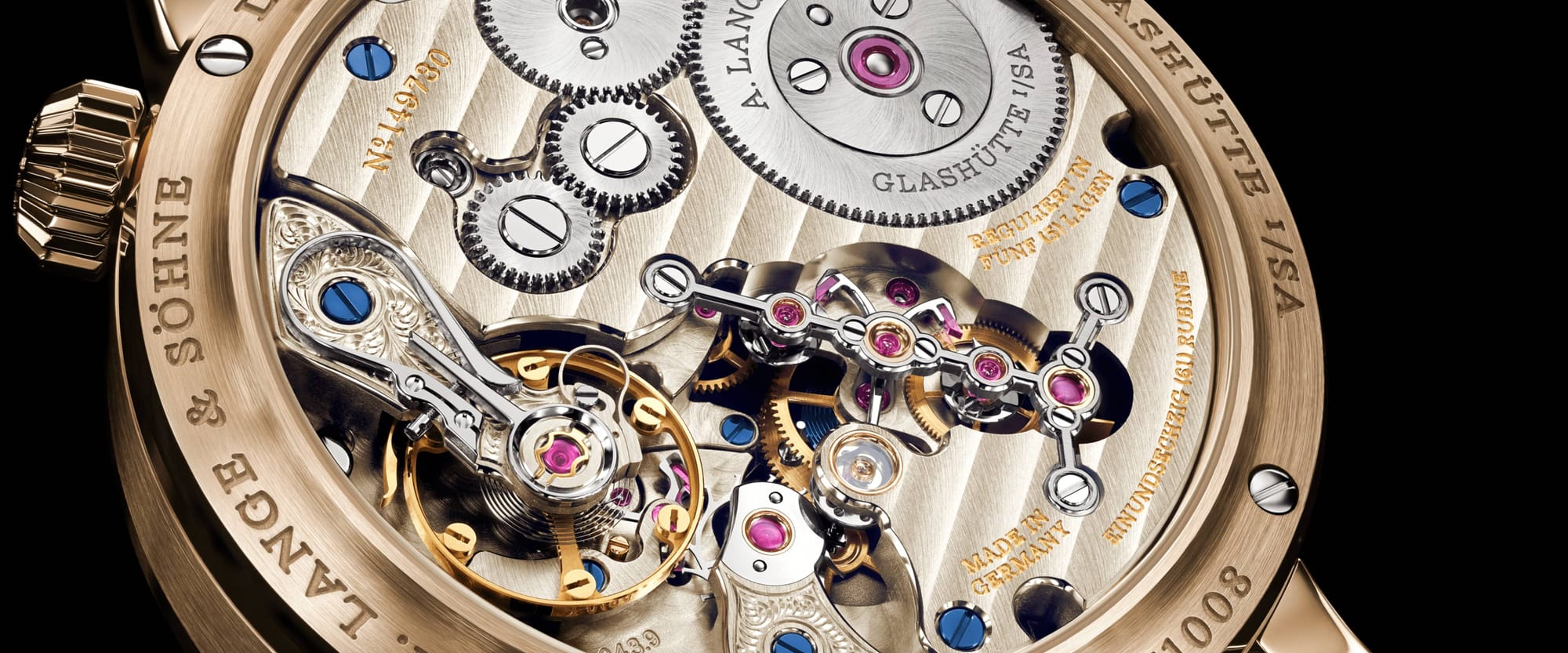
A. Lange & Söhne was re-established in the early 1990s. If you've ever seen one of their movements in person, you know why people care. German silver plates, hand-engraved balance cocks, finishing that photographs can't quite capture. They're not cheap. They're not trying to be.
Glashütte Original is the direct descendant of GUB itself. When state ownership ended, they kept the equipment and the know-how. Their watches tend to be more accessible than Lange, though "accessible" is relative when we're talking about luxury mechanicals.

Nomos Glashütte is the young one, founded right after reunification. Bauhaus-inspired dials, their own escapement (the Nomos Swing System), prices that won't bankrupt you. They've built a following among people who want something German-made without the five-figure price tag.
Mühle-Glashütte traces back to an 1869 instrument workshop. They make rugged, nautically-inspired pieces. Tutima left East Germany after WWII and came back in 1997. Union Glashütte has been around since 1893 and offers Saxon craftsmanship at lower price points. Moritz Grossmann revived a 19th-century name for high-end work. There are others.
One thing worth knowing: "Glashütte" is a legally protected designation. At least 50% of a watch's movement must be made in the town to use the name. It's not just marketing. The German Watch Museum Glashütte has the full history if you want to go deeper.
What strikes me about Glashütte is how much history got compressed into one small place. A visionary watchmaker, a world war, Soviet occupation, reunification, revival. The workshops still do hand-engraving and traditional finishing, but they also use CNC machines and CAD. Old and new, side by side. Local apprenticeship programs keep training the next generation.
Whether you're drawn to the intricate mechanics of an A. Lange & Söhne or the clean lines of a Nomos, there's something satisfying about knowing exactly where it came from. A valley in Saxony. Population: not many. Output: some of the best watches in the world.