

Ancient Mathematical and Scientific Discoveries
Ancient scientists solved problems we assumed were modern inventions. From Babylonian astronomy to Greek geometry, from Indian calculus 250 years before Newton to the impossible Antikythera Mechanism, ideas got buried for centuries then resurfaced.
The history of science has a habit of losing things. Ideas get buried for centuries, then resurface when someone stumbles across an old manuscript or corroded artifact. What strikes me about these rediscoveries isn't just that our ancestors were smarter than we assumed. It's that we keep being surprised by it.
Zero is older than you think
Most histories date zero's invention to around the 9th century. They're wrong by about 500 years.
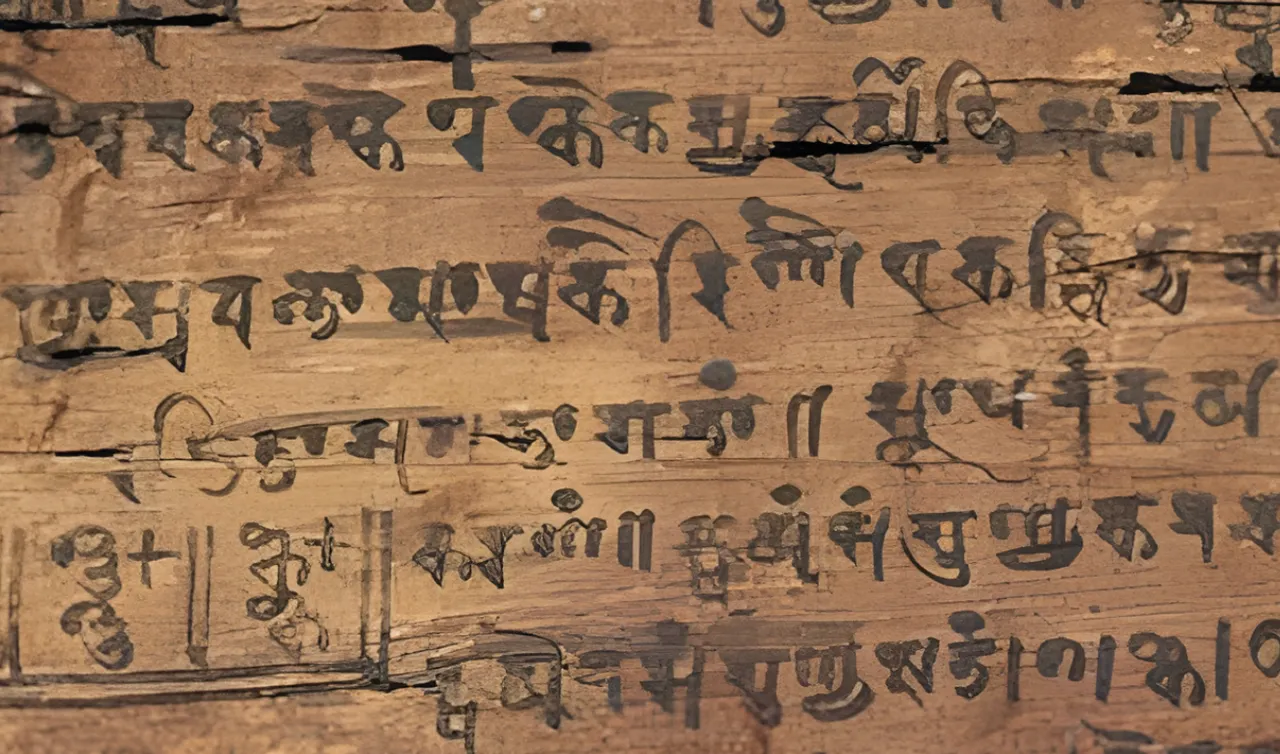
The Bakhshali manuscript, a collection of birch bark pages dug up by a farmer in 1881, sat in the Bodleian Library for over a century before anyone thought to carbon date it. When Oxford researchers finally tested it in 2017, parts dated to 224-383 CE. Over a century sitting in a library. Nobody curious enough to check.
The dots used as placeholder zeros on those pages eventually evolved into the symbol we use today. Indian mathematicians had been working with zero for centuries before the concept reached Europe. Zero started as just a placeholder in the Gupta period (4th-6th century). By the 7th century, they'd promoted it to full number status. Brahmagupta's Brahmasphutasiddhanta from around 628 CE contains the first known rules for arithmetic with zero. He called it "sunya" (empty), borrowing the term from an earlier mathematician named Pingala.
The Greeks were wrong about planetary orbits
A common misconception: Hipparchus discovered that planets move in ellipses. He did not. The ancient Greeks were committed to circular motion as the only geometry worthy of the heavens. They would rather stack circles on top of circles than consider ovals. There's something almost endearing about that stubbornness.
Hipparchus developed complex models using eccentric circles and epicycles (circles riding on other circles) to explain why planets appear to wobble and occasionally reverse direction across the sky. His math was sophisticated. It was also wrong.
It took 1,800 years for Johannes Kepler to propose that planets orbit the Sun in elliptical paths. Kepler relied on Tycho Brahe's meticulous observations to make his case. The Antikythera Mechanism offers physical evidence of this limitation. This ancient Greek device couldn't achieve perfect astronomical accuracy because it was built on circular models. The mechanism's designers didn't know what Kepler would figure out in 1609.
The wave-particle debate came later
The argument over whether light is a wave or a particle didn't start in ancient times. It began in the 17th century when Christiaan Huygens proposed that light travels like ripples in a pond, while Isaac Newton insisted it consists of tiny particles.
Both were partially right and partially wrong. The scientific world split into camps for over a century. Thomas Young and Augustin-Jean Fresnel shifted opinion toward wave theory in the early 1800s. Young's double-slit experiment showed light creating interference patterns, something only waves should do. But quantum mechanics in the 20th century revealed that light behaves as both a wave and a particle depending on how you measure it. Sometimes the answer to "which is it?" is just "yes."
Indian mathematicians developed calculus 250 years before Newton
This one bothers me. Calculus wasn't Newton's invention. The Kerala school in India had developed infinite series, the core mathematical tool underlying calculus, around 1350 CE. That's 250 years before Newton and Leibniz.
Mathematicians Madhava and Nilakantha developed power series for sine, cosine, and arctangent functions centuries before these techniques appeared in European mathematics. Why don't math textbooks mention these names? Dr. George Gheverghese Joseph from Manchester University points to centuries of colonial bias. Evidence for Indian-to-European knowledge transfer faces intense scrutiny, while European-to-Indian influence gets assumed without question.
I'm not qualified to adjudicate that debate. But I do find it telling that most people have never heard of Madhava.
The Antikythera Mechanism shouldn't exist
In 1901, divers recovered a corroded lump from an ancient shipwreck near Antikythera. Inside was a device built over 2,200 years ago containing dozens of precisely machined bronze gears. I keep coming back to this one.
Ancient Greeks turned a hand crank to calculate astronomical positions decades into the future. The device tracked Olympic Games, predicted eclipses, and modeled the moon's irregular orbit. It incorporated gearing that mimicked the moon's changing speed across the sky, despite the Greeks not knowing about elliptical orbits. They got the behavior right without understanding why.
X-ray studies in 2005 revealed the mechanism's full complexity. Recent research using imaging techniques from gravity-wave astronomy suggests one of its calendar rings might track a 354-day lunar calendar, though scholars still debate the details.
Nothing this sophisticated appeared again until medieval clockmakers over 1,000 years later. How do you lose the ability to build something like this? How does that knowledge just vanish?
Archimedes anticipated modern calculus
Archimedes (287-212 BCE) solved problems that wouldn't be addressed again until the invention of calculus nearly 2,000 years later.
His "Method of Mechanical Theorems" shows him using geometric infinitesimals to calculate areas and volumes. To find the area under a parabola, Archimedes imagined balancing the curved shape against a triangle on a lever. The technique worked, but he considered it too informal for rigorous proof. Even his shortcuts were brilliant.
He calculated π to remarkable precision, invented the Archimedean spiral, and developed notation for expressing extremely large numbers. His physics work on leverage, center of gravity, and buoyancy is still foundational.
The famous "Eureka" story: King Hieron suspected his goldsmith had mixed silver into a supposedly pure gold crown. Archimedes realized during a bath that water displacement could measure the crown's volume. Comparing its density to pure gold's known density would reveal the fraud. Whether he actually ran through the streets naked is probably embellishment. But the insight was real.
Apollonius's lost works turned up in Arabic translation
Apollonius, known as the "Great Geometer," wrote the definitive ancient work on conic sections around 200 BCE. His "Conics" explored ellipses, parabolas, and hyperbolas centuries before these curves became essential to physics and astronomy.
Scholars long believed only four of his eight volumes survived. Then books five and seven turned up among 200 Arabic manuscripts at the University of Leiden. They had been sitting there since the 17th century, ignored until modern scholars recognized what they were. Just sitting there. For centuries.
While Europe lost much of its classical knowledge during the early medieval period, Arabic scholars were translating and preserving Greek texts. Without their work, these mathematical treatises would have disappeared entirely. The Leiden discovery makes you wonder what else is sitting in archives, miscataloged or unrecognized.
History isn't a straight line from ignorance to knowledge. Zero's path from India to modern calculators took detours through Baghdad and Spain. Kerala's calculus sat unused for centuries. The Antikythera Mechanism represented a technological peak that wouldn't be matched for a millennium. We like to think progress only moves forward. It doesn't.

